Information and Offers

Would you like to find out more about our services or need a quote for your project?
Fill out the form, and you will be contacted as soon as possible.

Geostud is you!

Whether you're a student just starting out or an experienced professional, there's a place for you at Geostud!
Join the Geostud team! Fill out the form and an HR representative will get in touch with you.

Support & Contact Geostud
geo
Information and Offers
Careers
Contact Details
We use Cookies

This website uses cookies to give you the best browsing experience. To learn more read our privacy policy.

ManageEnables
Geotechnical

Geotechnical Department Services

company

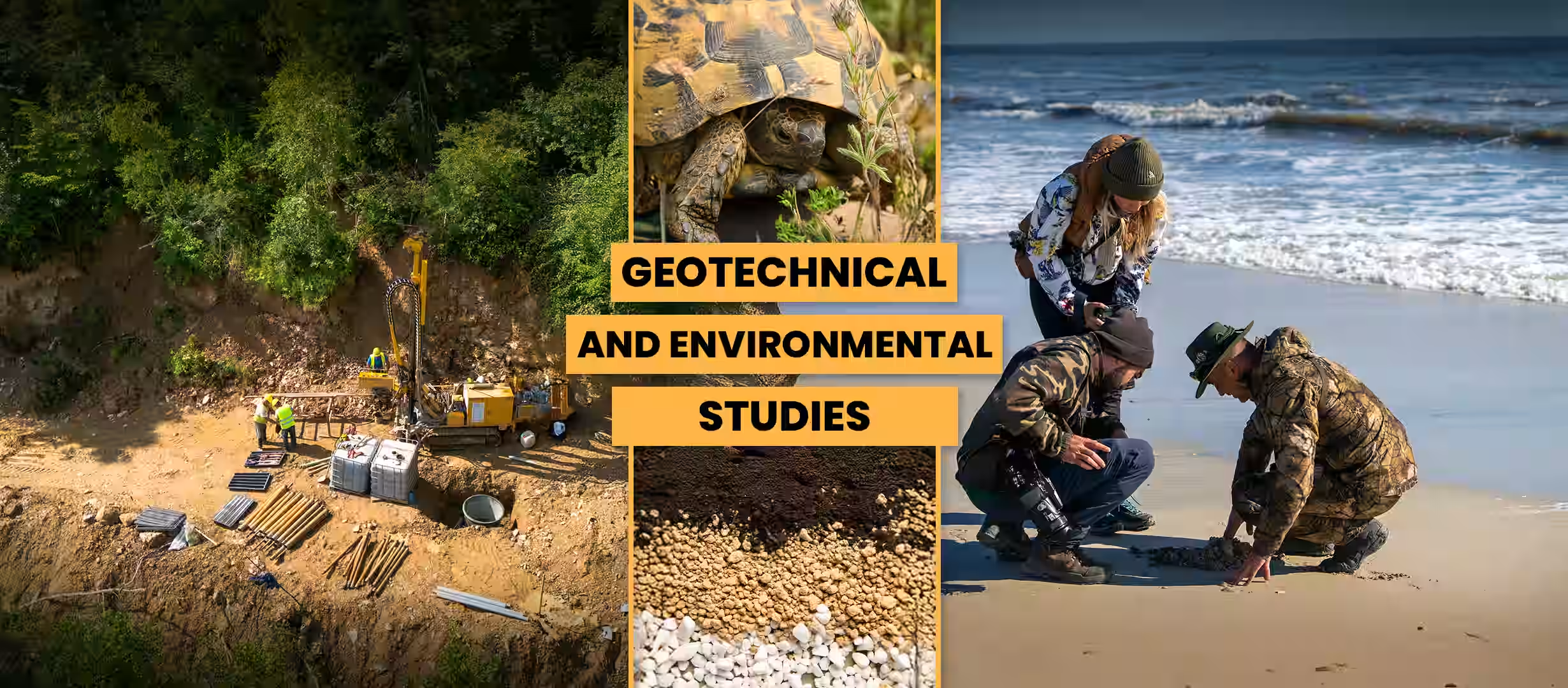
GEOTECHNICAL STUDIES

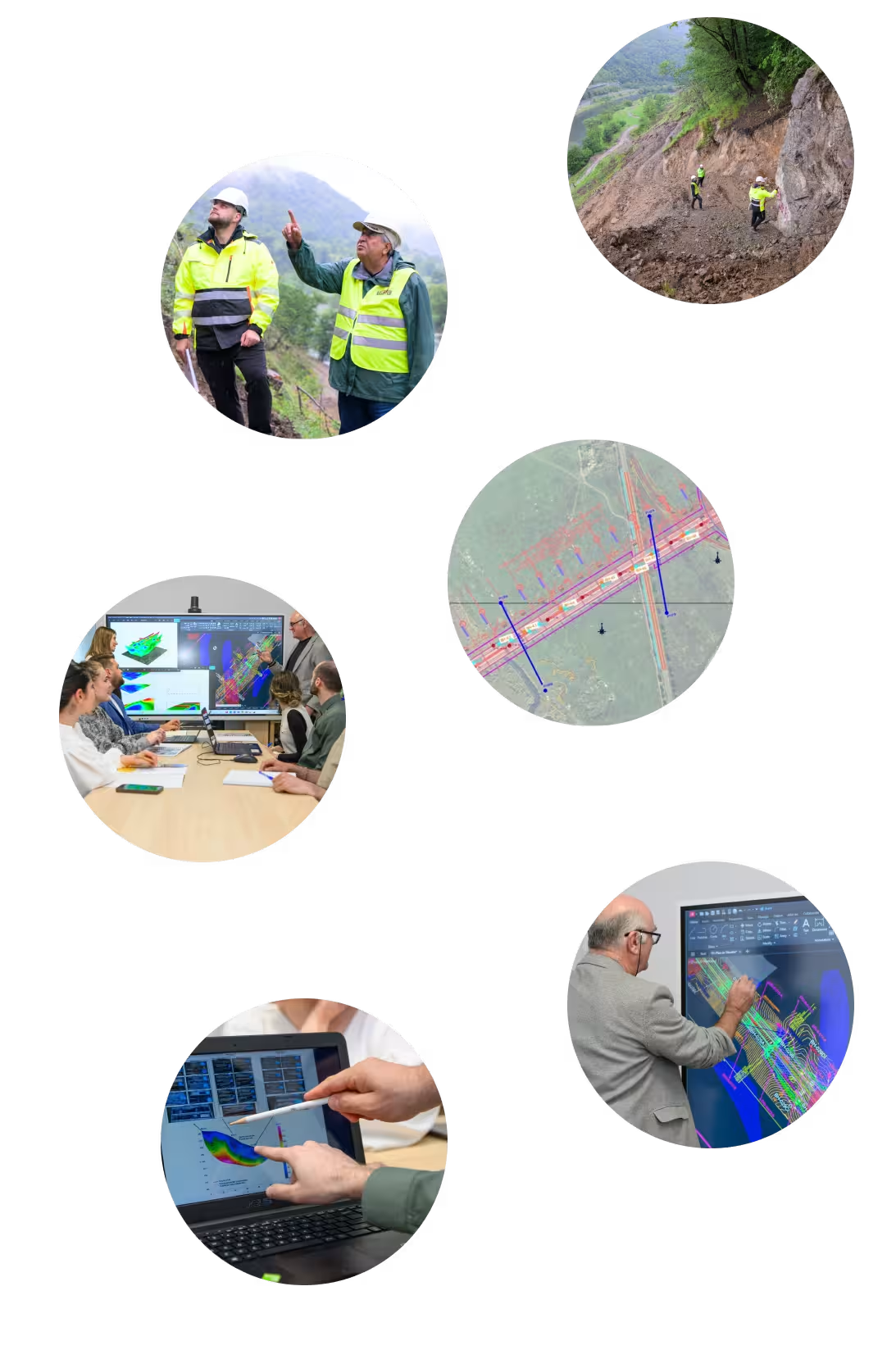
Geostud develops a diverse range of geotechnical studies, projects, and works, focused on the execution and performance monitoring of structures, including:

Geotechnical studies for:

  • Civil and industrial construction projects
  • Roads
  • Bridges
  • Railways
  • Airports
  • Wind farms
  • Navigable canals
  • Tunnels
  • Hydrotechnical constructions
  • Earth mass stability

Hydrogeological studies

Geophysical studies (electrometric and seismic) 

Geological studies 

Studies on quality control of construction works on site 

GIS modeling

Thematic maps

Impact/hazard modeling for landslides

Settlement analysis of foundation soils

Stability analysis of soil/rock masses

Calculation of Bearing capacity of piles

Consolidation and settlement calculations of soil masses

Geotechnical design (piles, retaining walls, special foundations, etc.)

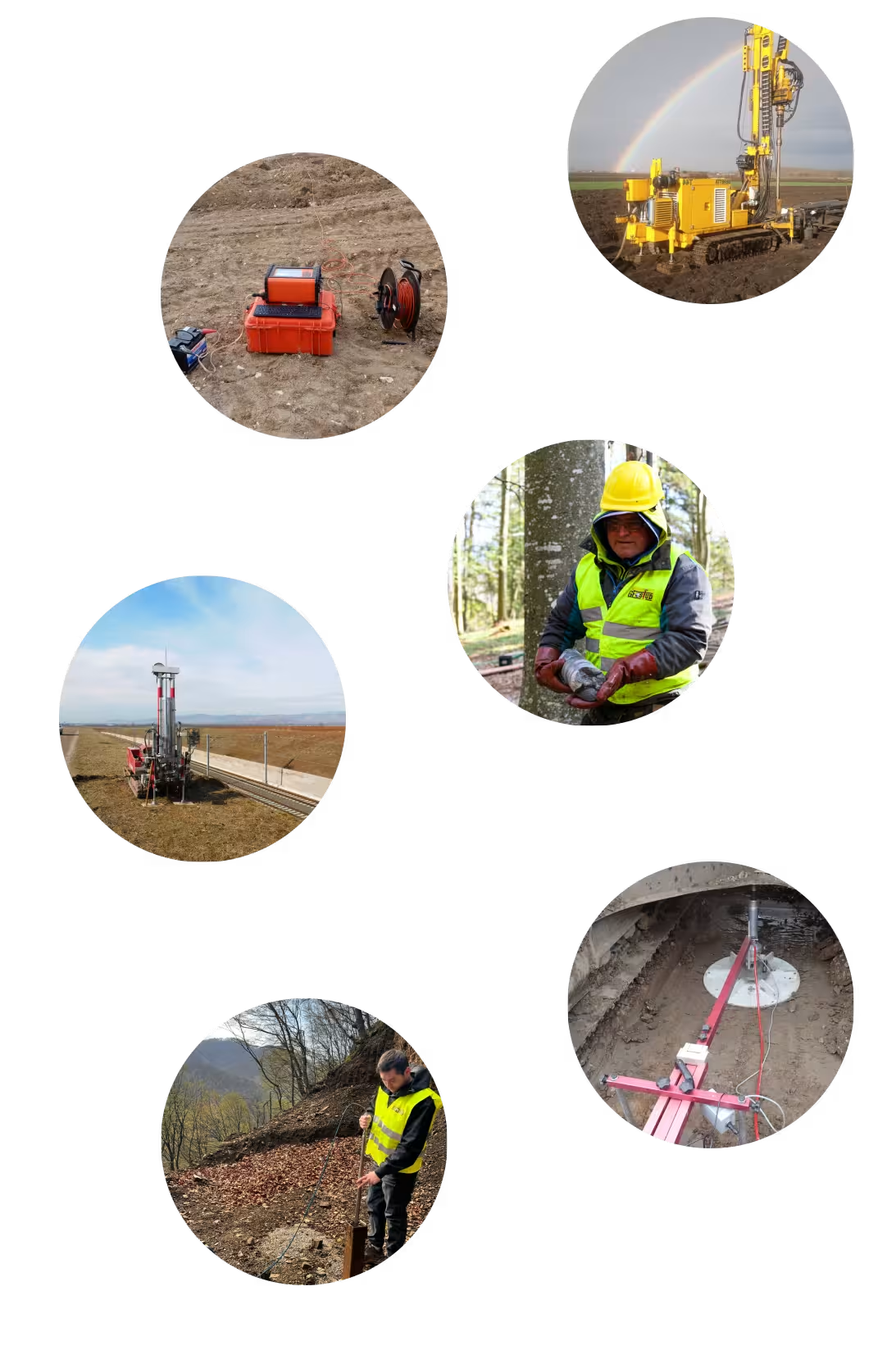
IN SITU INVESTIGATIONS

Static cone penetration testing with pore water pressure measurement (CPTu) and seismic cone penetration testing (SCPTu) 

Dynamic cone penetration tests (DPL, DPM, DPH, DPSH-A, DPSH-B)

Determination of the bearing capacity of the embankment by means of the static plate load test (LUKAS) 

MASW seismic measurements (multichannel analysis of surface waves) 

Crosshole sonic logging test – seismic measurements

Downhole seismic measurements

Determination of California Bearing Ratio (CBR)

Electrical resistivity imaging (ERI) and induced polarization (IP) geoelectric measurements

Piezometric measurements

Physical methods for monitoring soil mass deformations (inclinometric method)

Light weight deflectometer (LWD) tests

Vane test

Pocket penetrometer test

Deflectometric determination of the bearing capacity of roads for flexible and semi-rigid road structures was performed using the Benkelman beam deflectometer

Dilatometer testing

Determination of the linear deformation modulus by in situ plate load tests

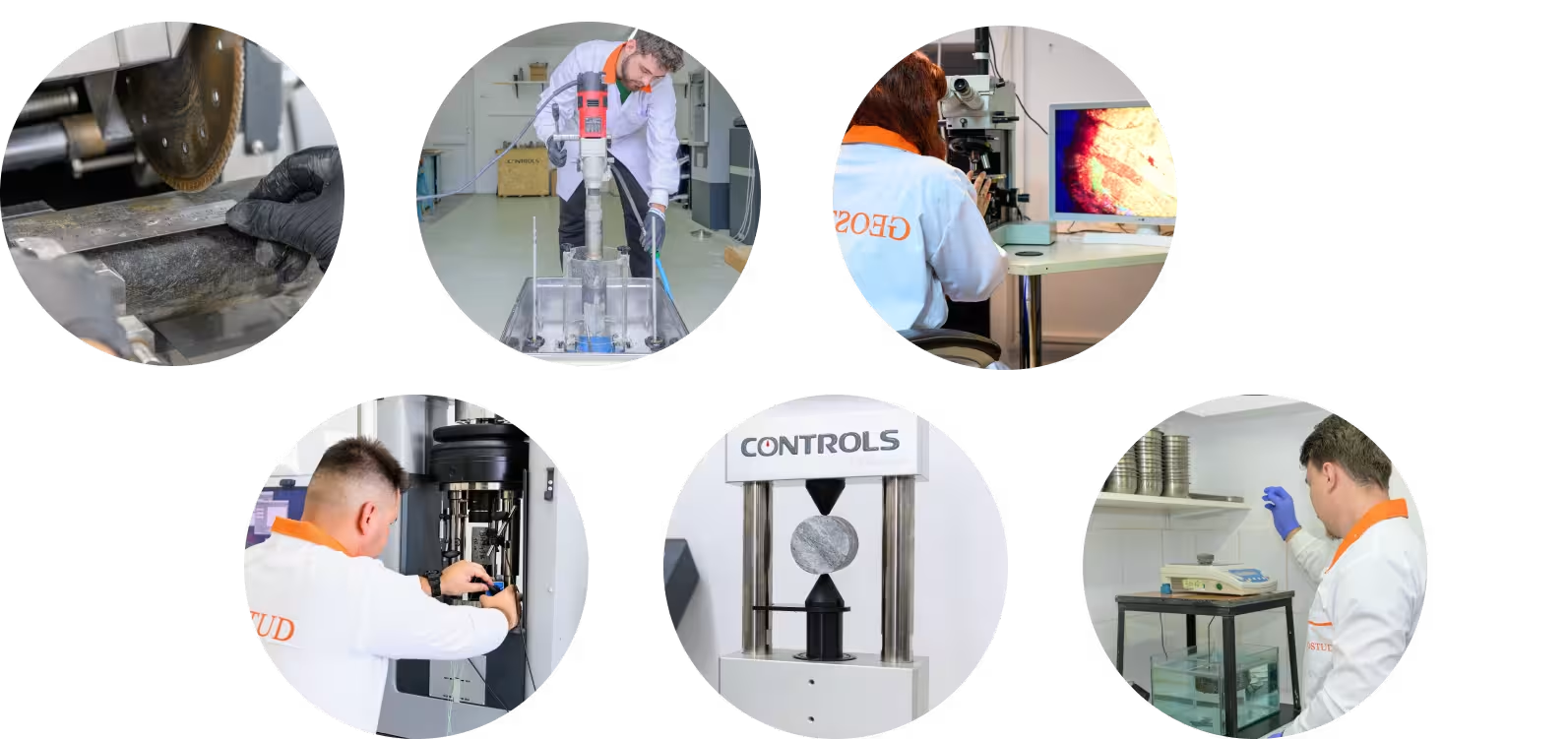
LABORATORY FOR TESTING AND
ANALYSIS IN CONSTRUCTION

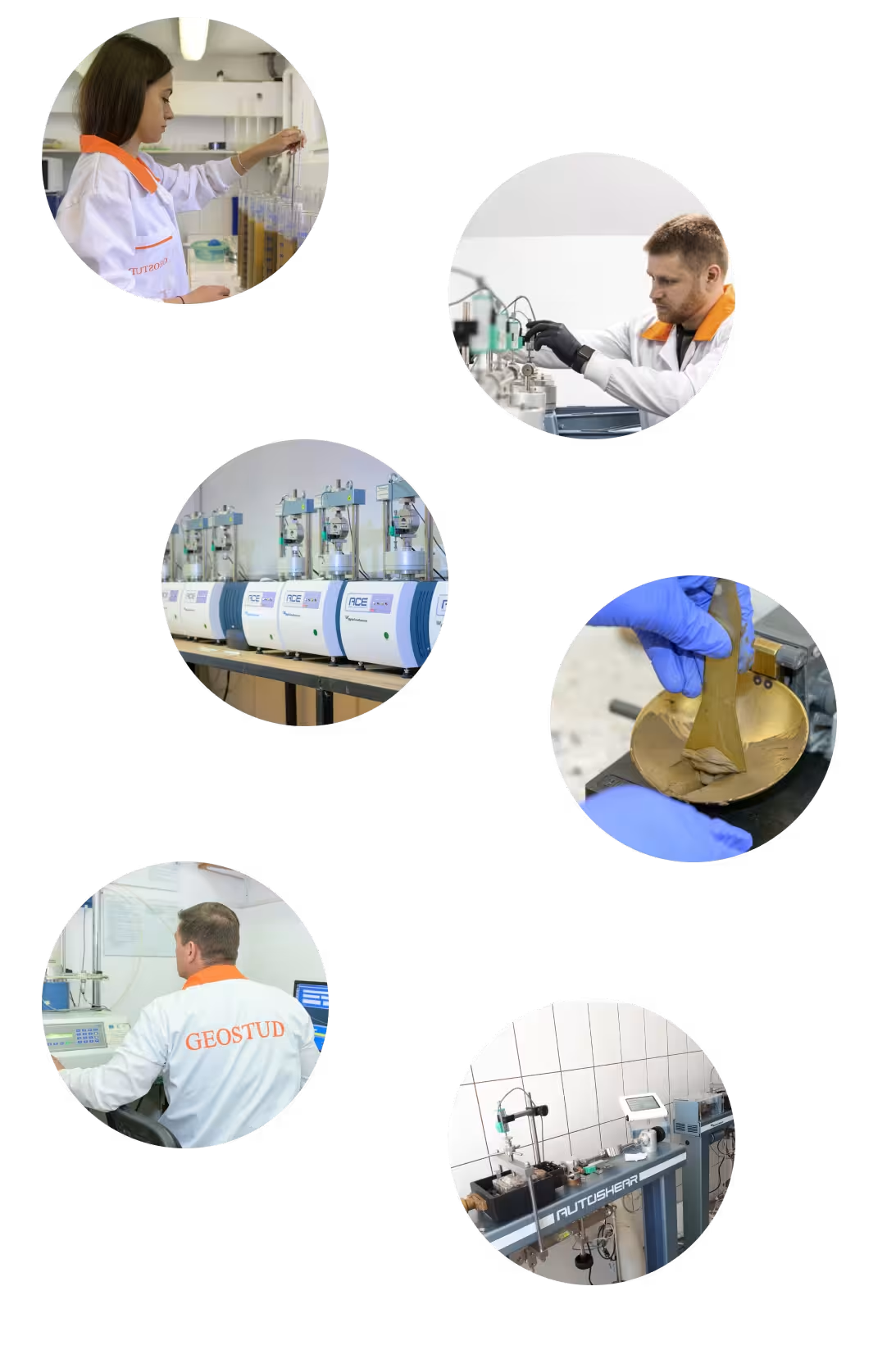
SOILS TESTS

Triaxial compression tests – consolidated drained (CD) and consolidated undrained (CU)

Direct shear tests

Unconfined compression tests

Standard / modified Proctor test

Determination of the physical and mechanical properties of expansive and shrinkable soils

Determination of swelling pressure

Determination of water content

Determination of bulk density – mould sampling method and immersion in fluid method

Determination of particle density – pycnometer method

Determination of particle size distribution

  • sieve analysis method 
  • combined method (sieving and sedimentation) for soils with wide grain size limits (clayey sand, sandy dust, etc.)
  • sedimentation method for soils with grain size less than 0.063 mm

In-situ bulk density determination – Volume determination using water and plastic foil method

Determination of Atterberg limits:

  • Determination of liquid limits – fall cone method, Casagrande method, and single point method
  • Plastic limit determination – soil thread rolling method and absorbent paper method
Tests for evaluating the thermal and weathering properties of aggregates 

ROCK TESTS

Determination of rock strength 

Triaxial compression test 

Determination of apparent density and bulk density 

Determination of total and open porosity 

Uniaxial compressive strength test 

Tensile strength determination – Brazilian test

Rock description and classification – petrographic and mineralogical description

GEOSYNTHETIC TESTING
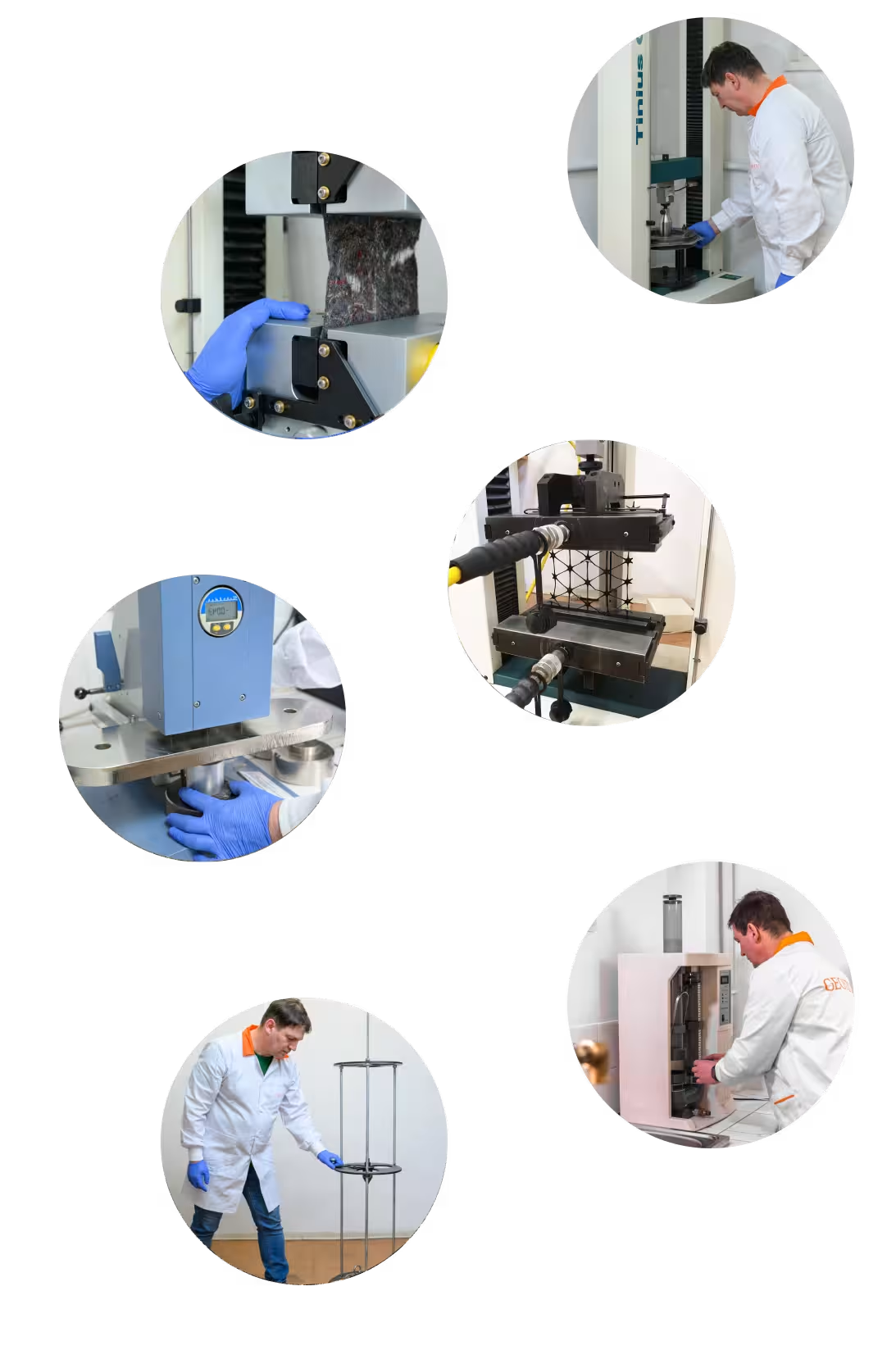
Conformity tests – determination of the physical and mechanical properties of geosynthetic materials and comparison of the results with the manufacturer’s technical data sheets
TESTS FOR ALL CATEGORIES OF GEOSYNTHETIC MATERIALS

Determination of California Bearing Ratio (CBR

Tensile test for joints/seams by wide-width strip method

Determination of frictional characteristics (direct shear test)

Test method for evaluating mechanical damage under repeated loads (damage caused by granular materials)

TESTS ON GEOTEXTILE MATERIALS AND RELATED PRODUCTS

Test method for the determination of mass per unit area of geotextiles and geotextile-related products

Determination of thickness at specified pressures

Determination of water permeability characteristics normal to the plane, withoud load

Test method for determining the In-plane water flow rate per unit Width and hydraulic transmissivity of a geosynthetic using a constant head

Standard test method for determining the filtering efficiency and flow rate of a geotextile

Dynamic perforation test (cone drop test)

Standard test method for determining the tensile properties of geogrids by the single or multi-rib tensile method

Evaluation of mechanical damage under repeated loading: damage caused by granular materials – wear and aging

Test method for determining the resistance to oxidation

TESTS ON GEOMEMBRANES

Determination of weld integrity by heat fusion methods for unreinforced geomembranes (debonding test)

Determination of weld integrity by thermofusion methods for unreinforced geomembranes (shear testing)

Wide-width tensile test

Performance test for geosynthetic materials under anticipated site conditions
Standard test method for determining the coefficient of soil and geosynthetic or geosynthetic and geosynthetic friction by the direct shear method

Standard test method for measuring the soil-geotextile system clogging potential by the gradient ratio