

Environmental protection studies

Integrated Solutions
Geostud adopts a multidisciplinary approach that combines scientific expertise with advanced technologies to provide partners with integrated solutions – from field investigations and analyses conducted in its own authorized, accredited, and internationally recognized laboratories, to specialized modeling, study development, specialized technical consulting, and expert assessments.




Environmental Department - Milestones

Development of specific measures for the Tirgu-Neamt-Iași-Ungheni motorway (A8)
Following monitoring campaigns carried out on the route of the future A8 highway, Geostud specialists have identified the presence of the European gopher (Spermophilus citellus) and the steppe viper (Vipera ursinii ssp. moldavica), both protected species at national and European level.
In collaboration with the designer, for both species, measures have been integrated to conserve and maintain the connectivity of their populations. Thus, to protect the existing gopher colonies on and in the vicinity of the highway corridor (300 m right-left), favorable habitats were mapped in order to relocate the individuals before the start of the works. At the same time, in order to ensure the connectivity of habitats favorable to the viper species, a dedicated crossing has been set up to facilitate its movement and contribute to maintaining the genetic viability of the populations.
Relocation of species of Community interest for the Sibiu-Pitești motorway project
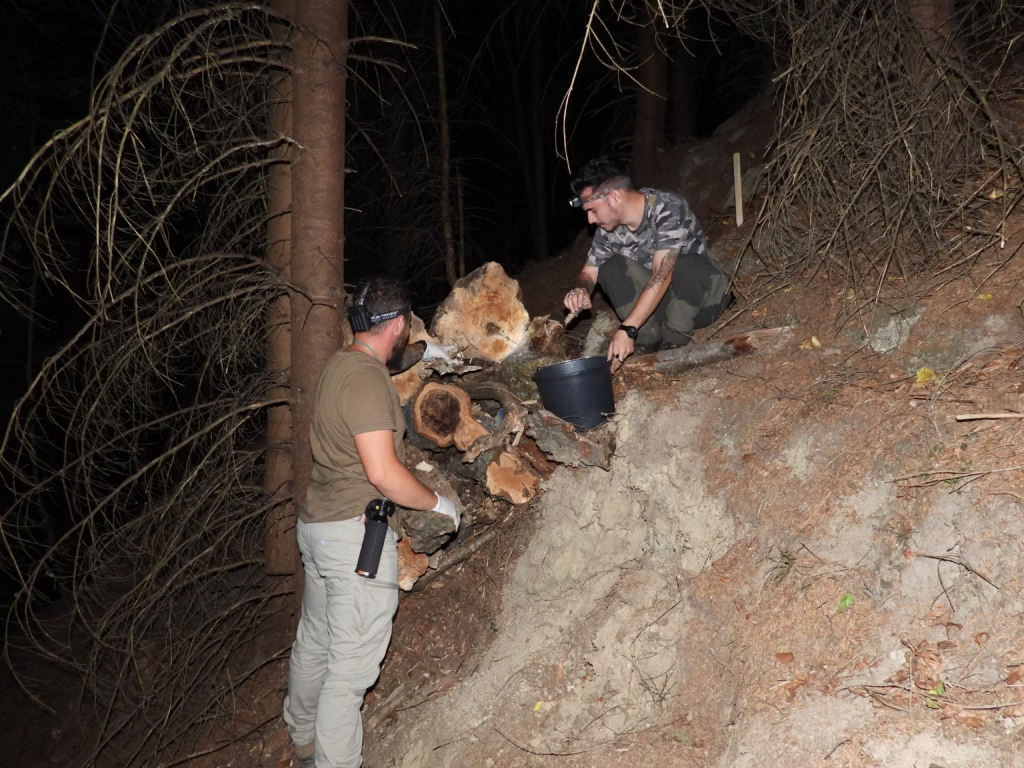
During the monitoring campaigns to establish the baseline status of the Sibiu-Pitești highway site, Geostud specialists identified the presence of species of community interest with reduced mobility within the expropriated corridor of the project, namely Lucanus cervus (the common buckthorn), Cerambyx cerdo (the great oak croaker) and Bombina variegata (the yellow-bellied pond bunting).
In order to protect these species, a ministerial derogation was obtained and we relocated the specimens to favorable habitats, similar to those in which they were identified, thus ensuring favorable conditions for the conservation of local populations.
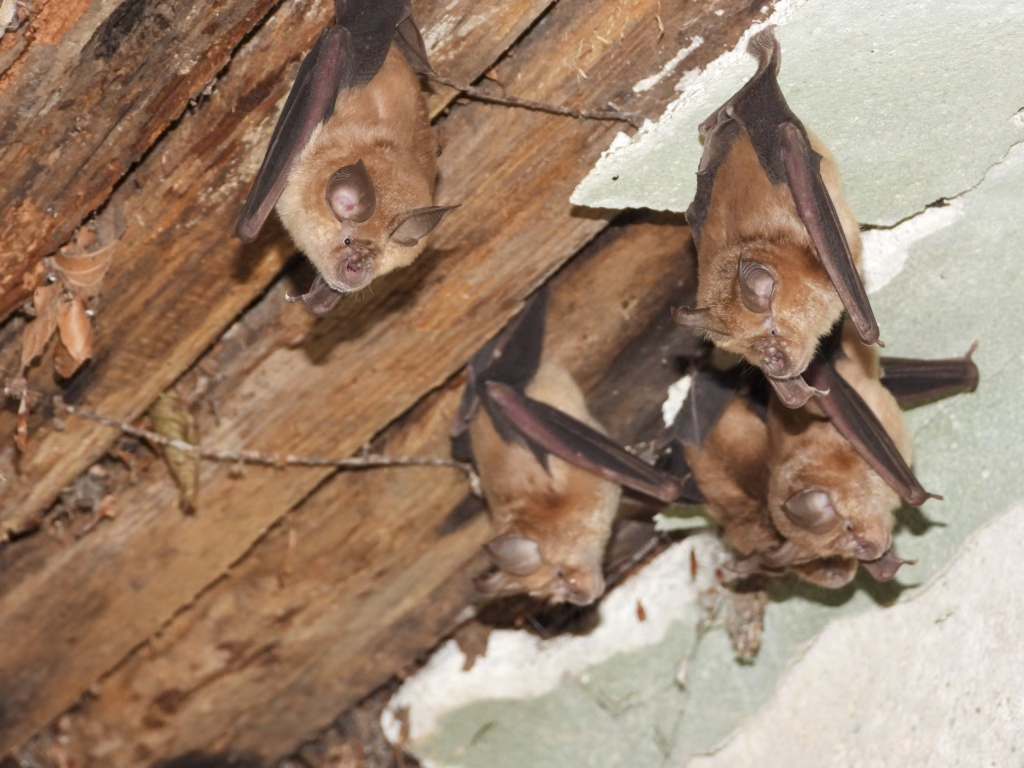
Chiroptera monitoring in urban areas
The Geostud team carried out monitoring of residential buildings and educational institutions to identify the possible presence of bat colonies and nesting birds that use these structures as roosting places.
During the monitoring campaigns, roofs, basements, building facades, cracks in walls, cracks in beams, and spaces under roofs were inspected. Acoustic monitoring, a non-invasive method that does not affect bat species, was also carried out. Using specialized ultrasound detection equipment, experts recorded the signals emitted by the bats without disturbing their normal activity.
The role of chiroptera in the urban ecosystem is a beneficial one, as they contribute to natural pest control by eating insects. This reduces the need for pesticides. For example, Romania's smallest bat, Pipistrellus pipistrellus, can consume about 600 mosquitoes in an hour.
At sites where the presence of protected species has been confirmed, specific conservation measures have been established on a case-by-case basis. These measures ensure that further work on the buildings is carried out in a way that respects the needs of the species identified.